
Prefer concrete learning
- Want real understanding behind every symbol
- Believe children learn while moving
- Are comfortable preparing simple material at home
A child understands letters and numbers by touching, arranging, and moving objects first, long before either appears as a symbol on paper.
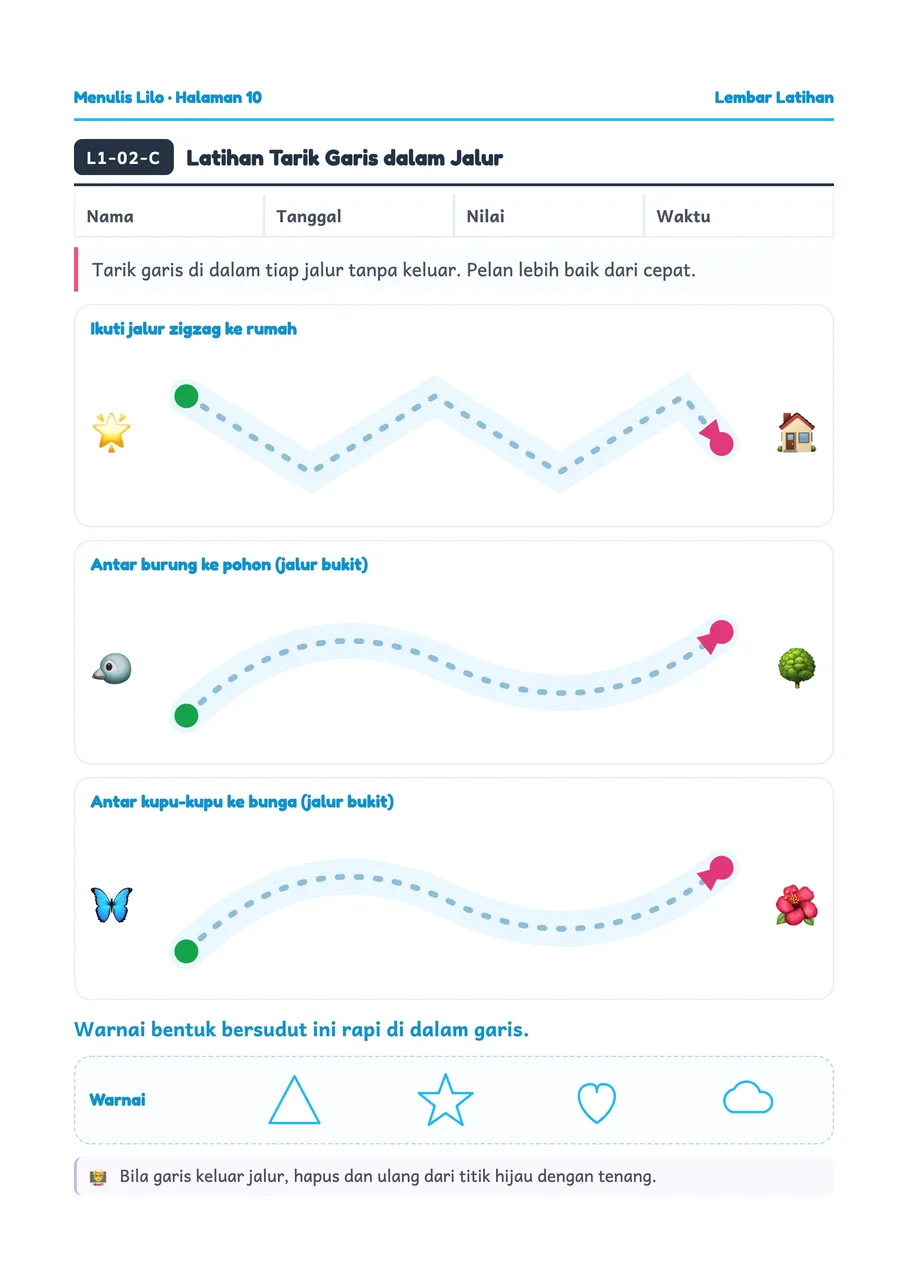
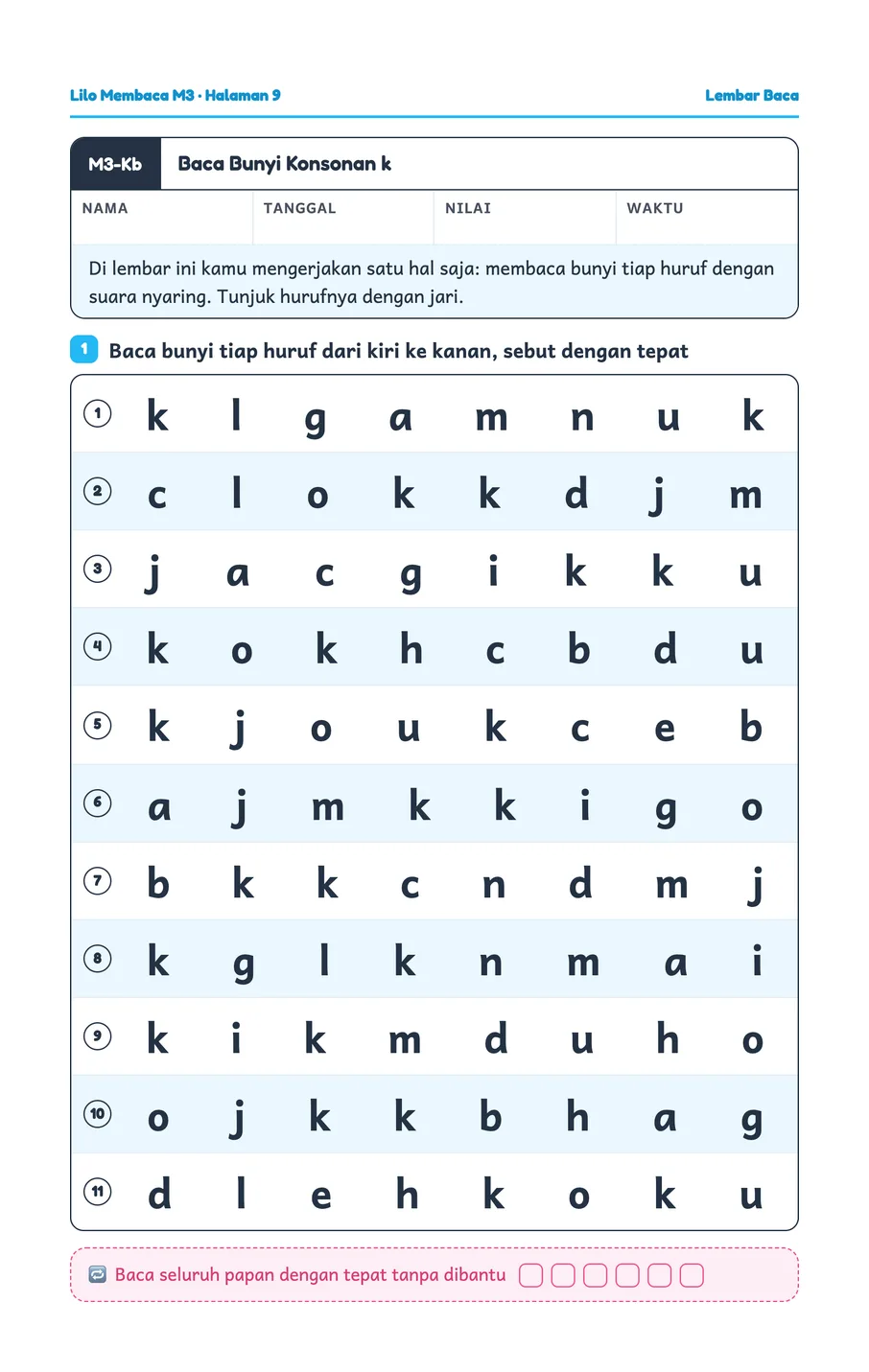
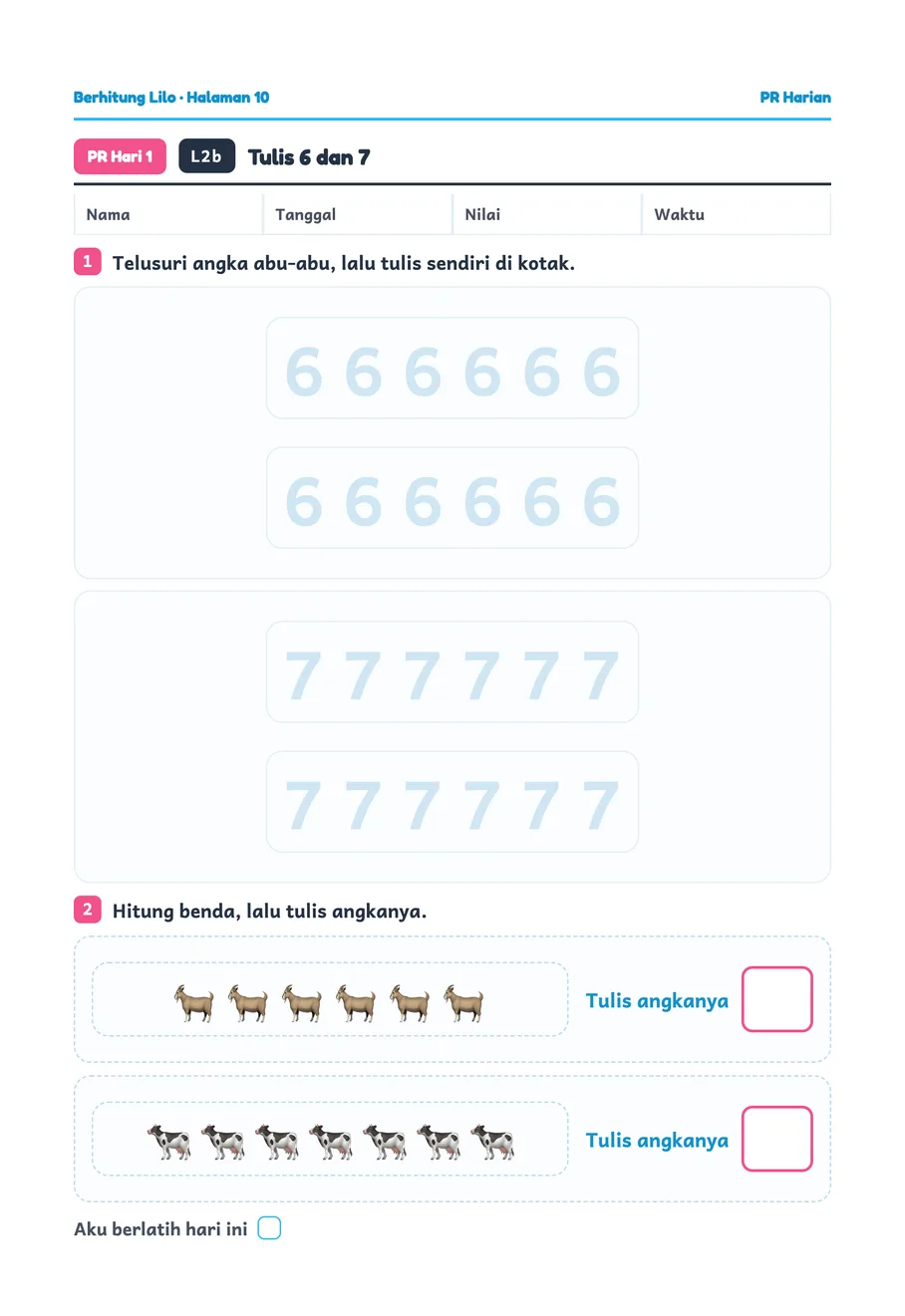 Real sheets from inside the pack
 The Montessori approach lets a child meet letters and numbers through objects they can hold: letters traced by hand, beads that are counted, cards that are matched. Written symbols arrive only after meaning has been built through hand and eye. The printed sheets in this pack work as activity mats and guides, so your child works through them while holding real objects.
Young children learn with their hands. When a letter appears only as a picture on paper, what often forms is memory of a shape. When a letter can be touched and traced, hand muscle and sound memory form together.
This pack brings that way of working home without expensive equipment. There is a guide from tactile letters to the first word, playdough mats for shaping letters and numbers, laminatable number tracing cards for repeated use, letter tracing paired with sounds, and line and pattern practice to prepare the hand.
On the number side, beads and rods make quantity real in a child's hand, joined by magic dot cards from one to twenty, sheets comparing more and fewer, and twenty five counting activities using kitchen objects. A twelve theme collection of picture vocabulary cards (nomenclature cards) and thirty practical life activities complete it, from pouring water to fastening buttons alone.
Three reasons parents choose this route.
Six companion sheets, from preparing the hand to grasping quantity.
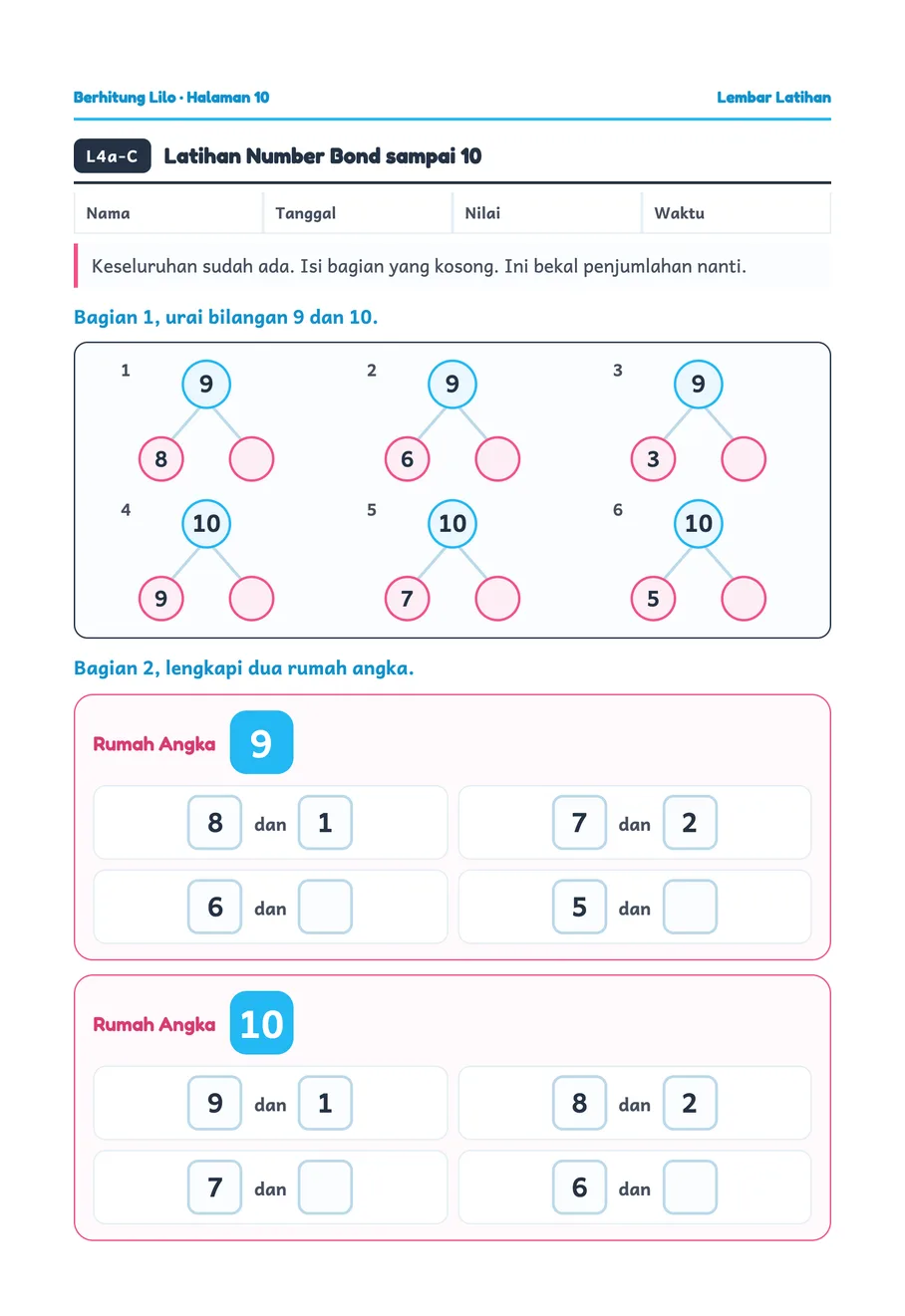
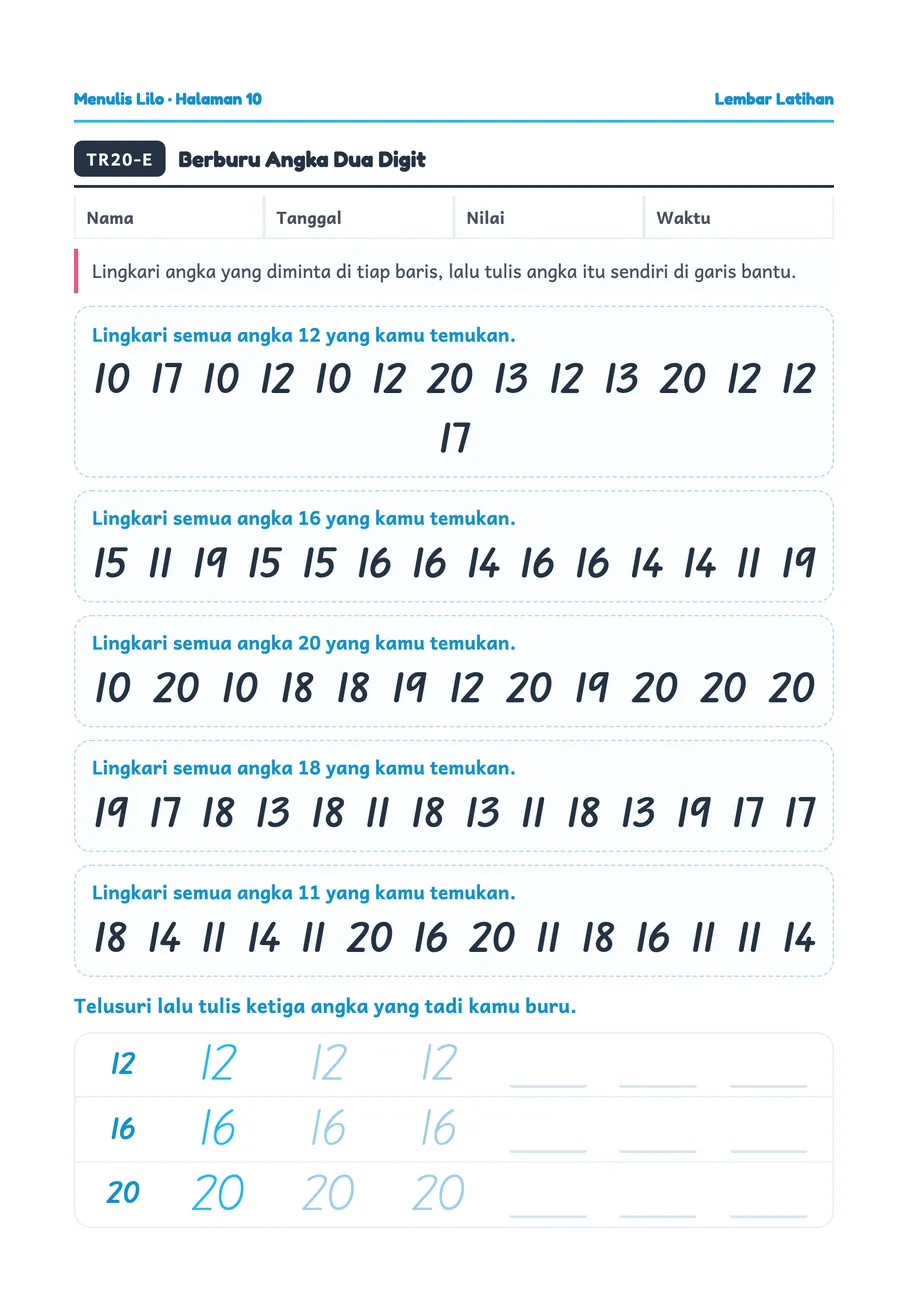
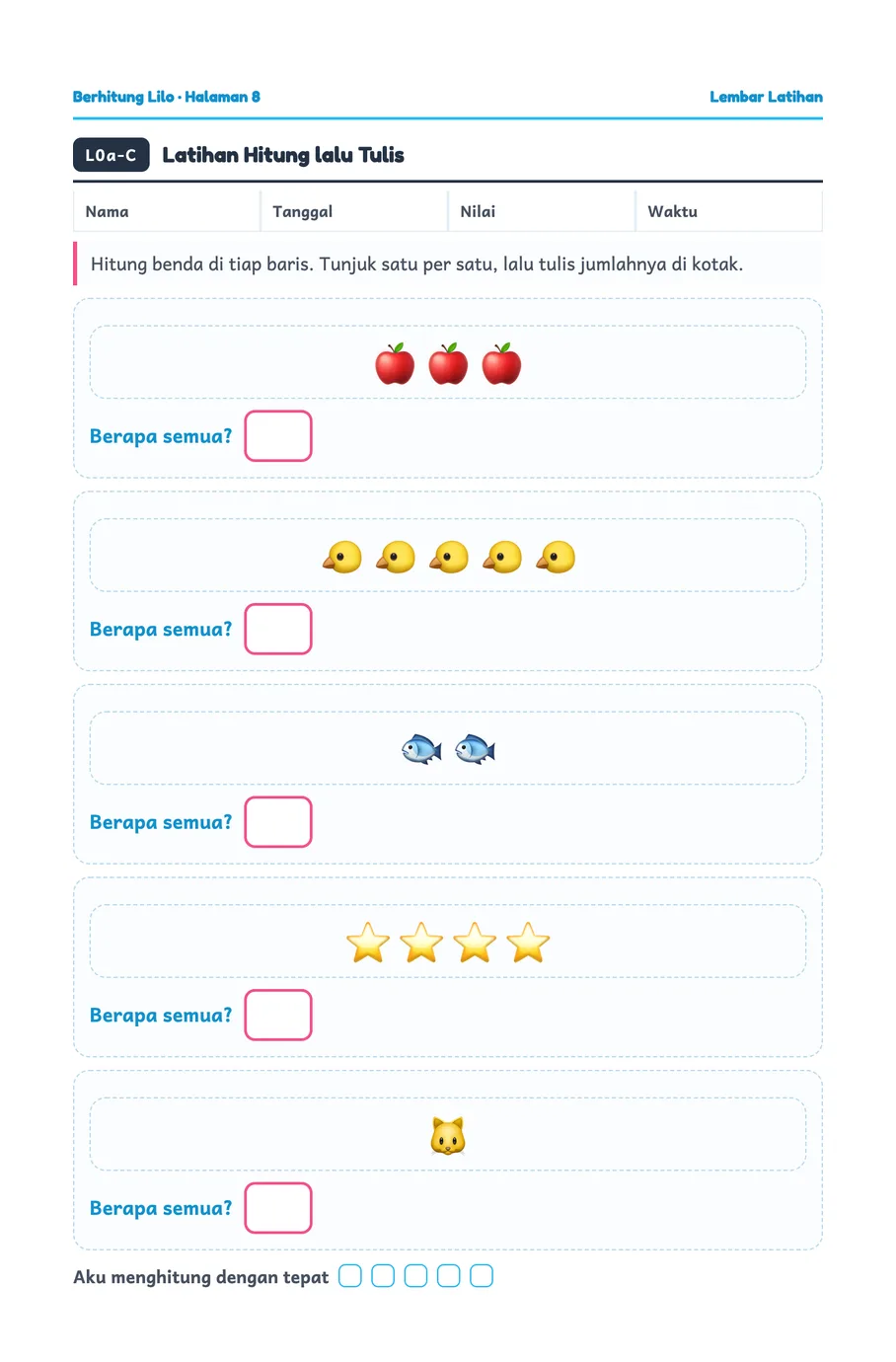
Guides, activity mats, cards, and companion sheets that are all used alongside real objects, so your child keeps moving and handling things while learning.
A guide from tactile letters to the first word, letter playdough mats, and letter tracing paired with sounds and example words.
Beads and number rods, magic dot cards from one to twenty, and sheets comparing more, fewer, and the same.
Twelve complete themes for enriching vocabulary precisely, with the Indonesian animal series as the free sample.
Sixty line and pattern exercises, reusable number tracing cards, and twenty five sensory activity ideas built from cheap materials.
Thirty practical life activities from pouring and spooning to tidying, plus twenty five counting activities using kitchen objects.
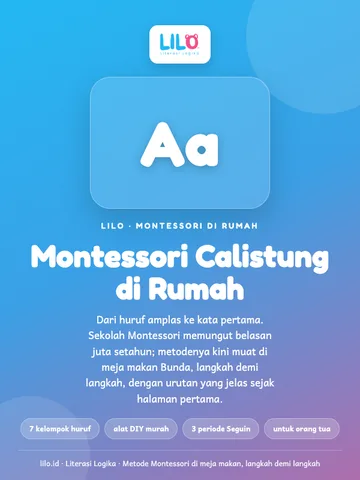 Montessori Calistung di Rumah
 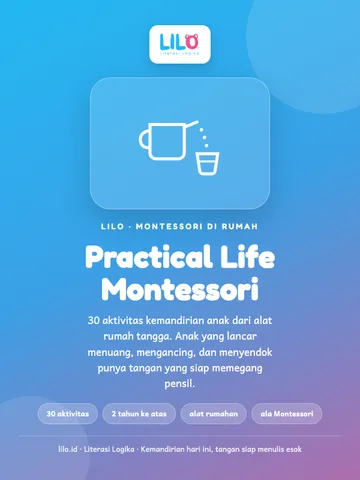 Practical Life Montessori
 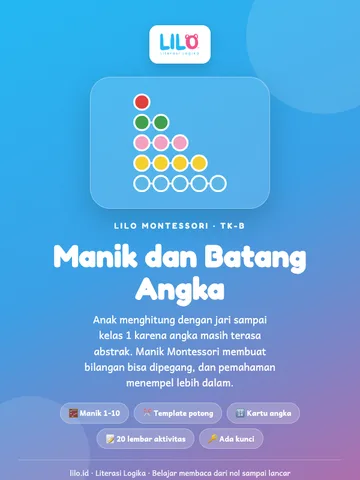 Manik dan Batang Angka
  Perpustakaan Nomenklatur Montessori
  Playdough Mat Angka dan Huruf
  Kartu Tracing Angka Laminating-Ready
  Tracing A-Z Lengkap
  Flashcard Titik Ajaib 1-20 (Metode Kuantitas Cepat)
  Jago Pegang Pensil
  Berhitung Sambil Main
  Aktivitas Sensorik dan Motorik Halus di Rumah (25 Ide Bahan Murah)
  Kartu Kilat Huruf A-Z Lilo
  Kartu Nomenklatur Montessori
  Banyak atau Sedikit? 30 Lembar Membandingkan Jumlah
 Two free materials can be tried first: the A to Z letter flashcards and the Indonesian animal nomenclature cards.
The Montessori way runs most easily when material is arranged neatly and within a child's reach.
Fill each with one activity, for example a letter playdough mat, nomenclature cards, and number beads. Too many choices only confuse.
Offer the trays, then give time. Children who choose for themselves usually stay with one activity longer.
Demonstrate the movement calmly with few words, then let your child repeat it their own way.
Returning material to its place is part of the activity, and independence grows exactly there.
Rotation keeps curiosity alive, and material set aside feels new when it reappears.
Three elements, adapted so a household can run them without costly equipment.
A child holds the quantity first and meets the numeral after. That order matches the CPA sequence used across every Lilo counting material.
Each material trains a single thing, so a child knows precisely what is being mastered and when success arrives.
Pouring, spooning, and tidying train the fine control that a pencil later demands.
No. The material is made to be printed at home and paired with household objects such as buttons, spoons, containers, and play dough.
It is used most with children aged three to six. Practical life activities can start earlier, while first words usually appear around age five.
Picture cards matched with the name of the object, used to build precise vocabulary. This pack carries twelve themes, including the Indonesian animal series.
Yes, and they often complement each other. Many families use this bundle for concrete work and continue the written practice in the Complete 3-in-1 Bundle.
Yes, especially for afternoons at home. Concrete activity helps a child who meets only sheets and whiteboards at school.
Around ten to twenty minutes, stopping when your child signals they are finished. The quality of attention matters more than the length.
This Montessori path rests on objects your child can hold. The classes below offer tutors used to that way of learning, and the next two packs continue into more structured material once your child is ready.
Fourteen Montessori materials you can run with everyday objects.