
Children aged 3 to 4
- Just beginning with pencils and crayons
- Marks still wander without direction
- Needs practice with lines, curves, and zig zags
Neat writing begins with a ready hand. This pack trains both in order, from holding a pencil to copying sentences on four ruled lines.
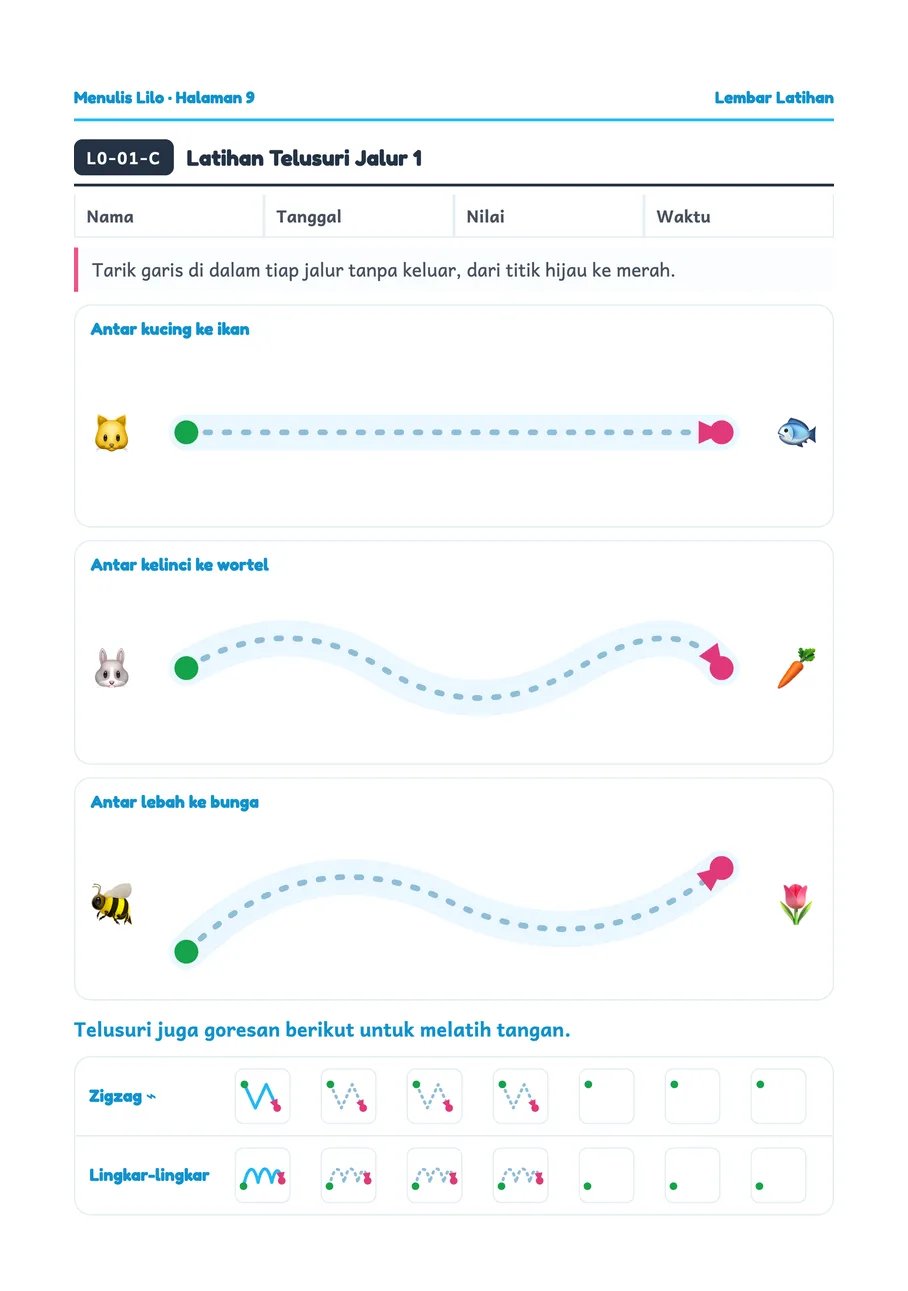
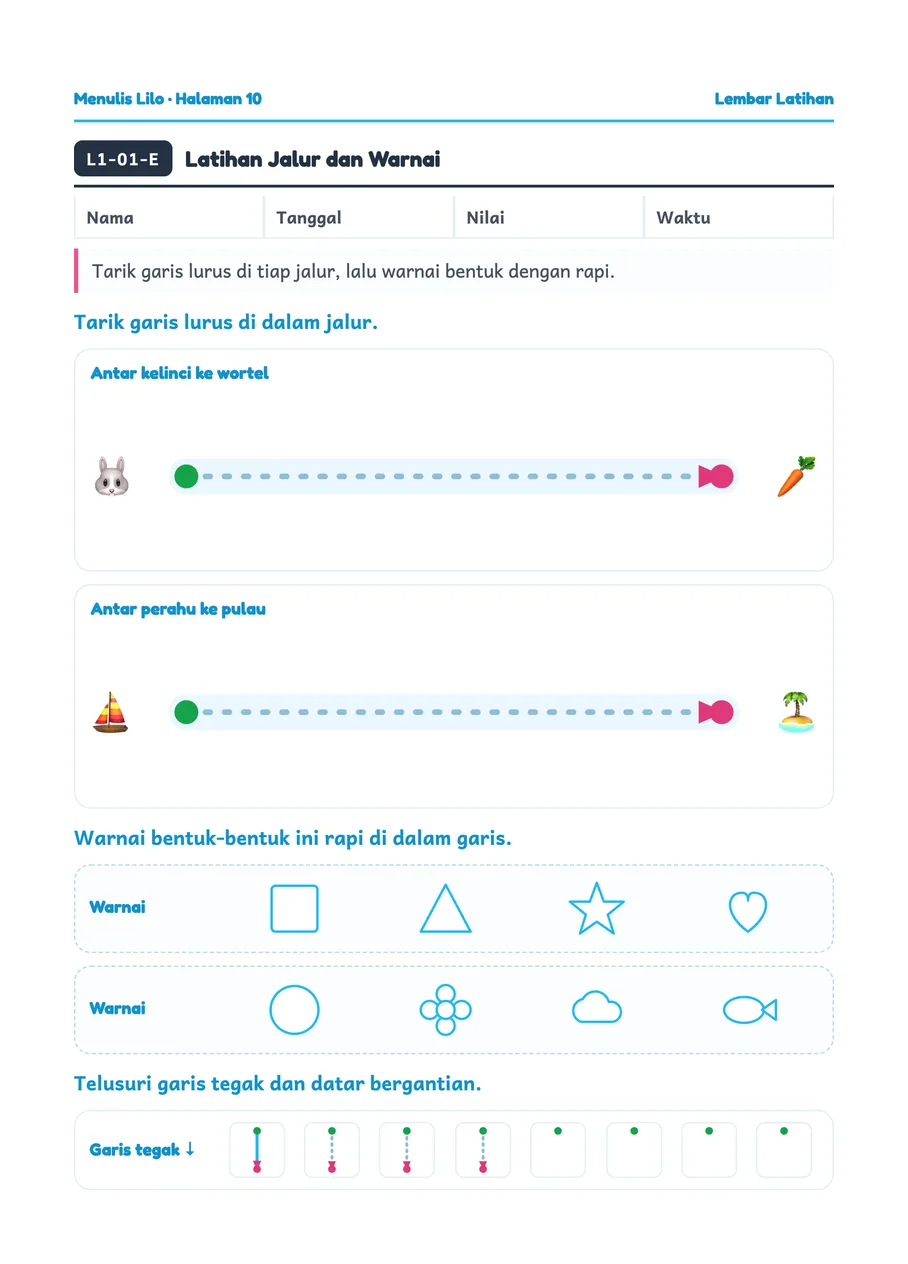
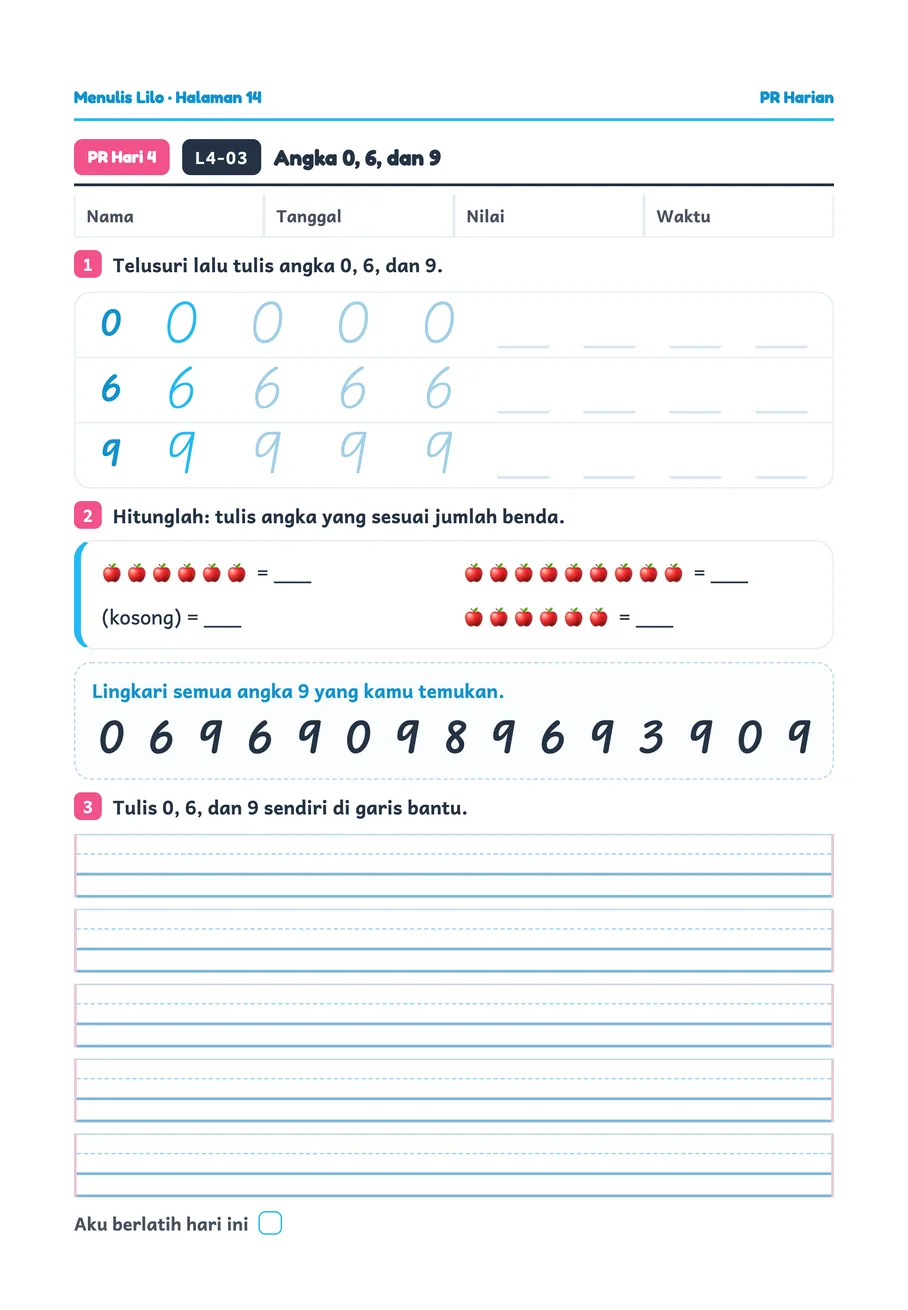
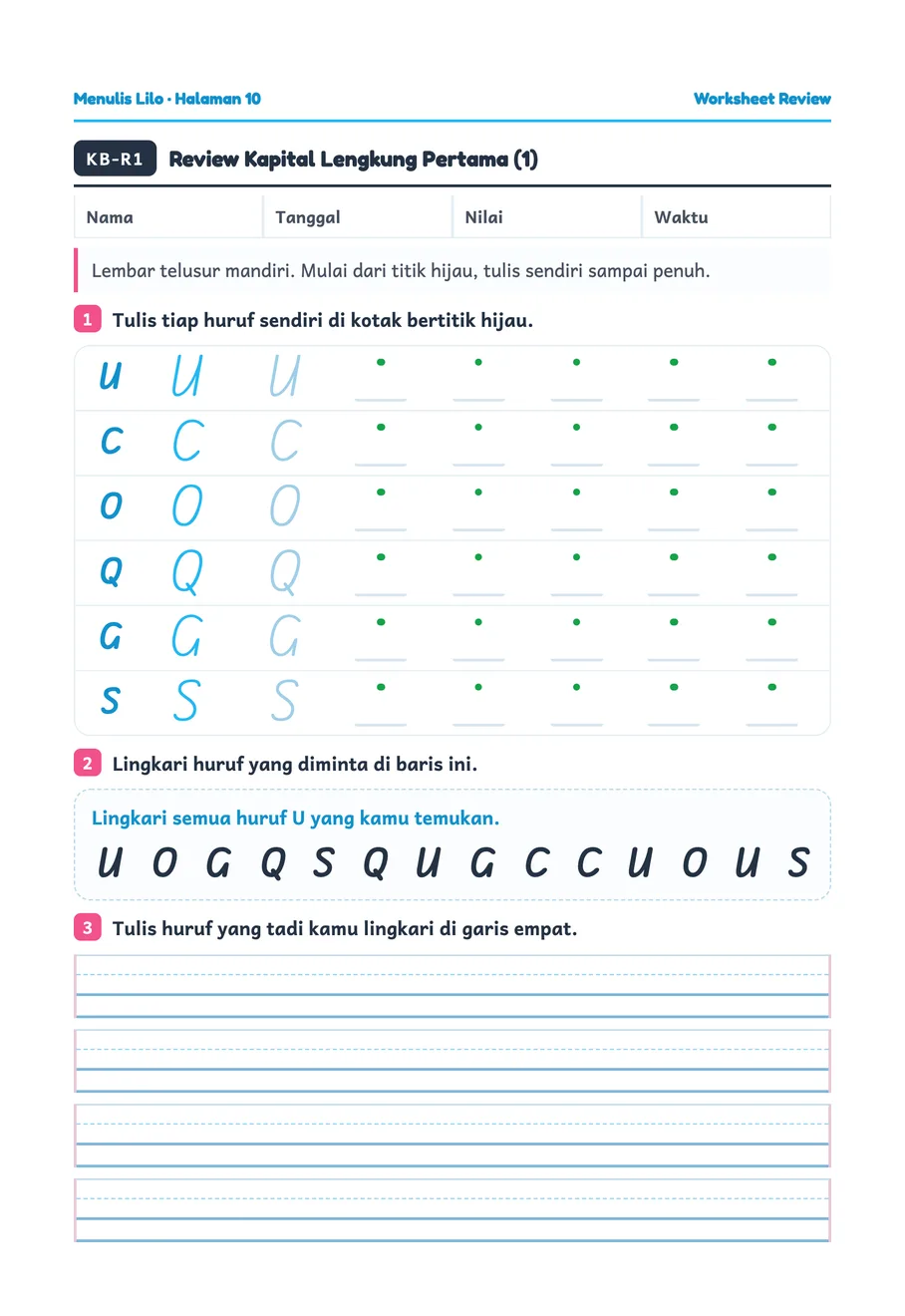 Real sheets from inside the pack
 Handwriting is trained in sequence: hand strength and pencil grip, tracing lines and patterns, letter tracing with guides that fade, writing letters unaided on four ruled lines, copying themed words, then building and copying simple sentences.
Parents usually judge handwriting by the finished page: reversed letters, sizes that rise and fall, lines wandering out of the row. The cause often sits much earlier, in finger muscles that are not ready and a pencil grip that has already settled the wrong way.
So this pack opens with sixty line and pattern exercises, plus twenty screen free games that prepare the hand. Only then does letter tracing begin, offered at three levels of dot thickness so support fades gradually until your child writes unaided.
The stages that follow run in a tidy line: pairing capitals with lower case letters, writing letters unaided on four ruled lines, copying themed words from home, animal, and fruit themes, writing one hundred themed words, building a first sentence, then copying fifty everyday sentences. At the end sits the sheet children love most, the one where they write their own name.
Three stages of hand readiness that benefit most.
Watch the dotted guides thin out from the first sheet until your child writes sentences unaided.
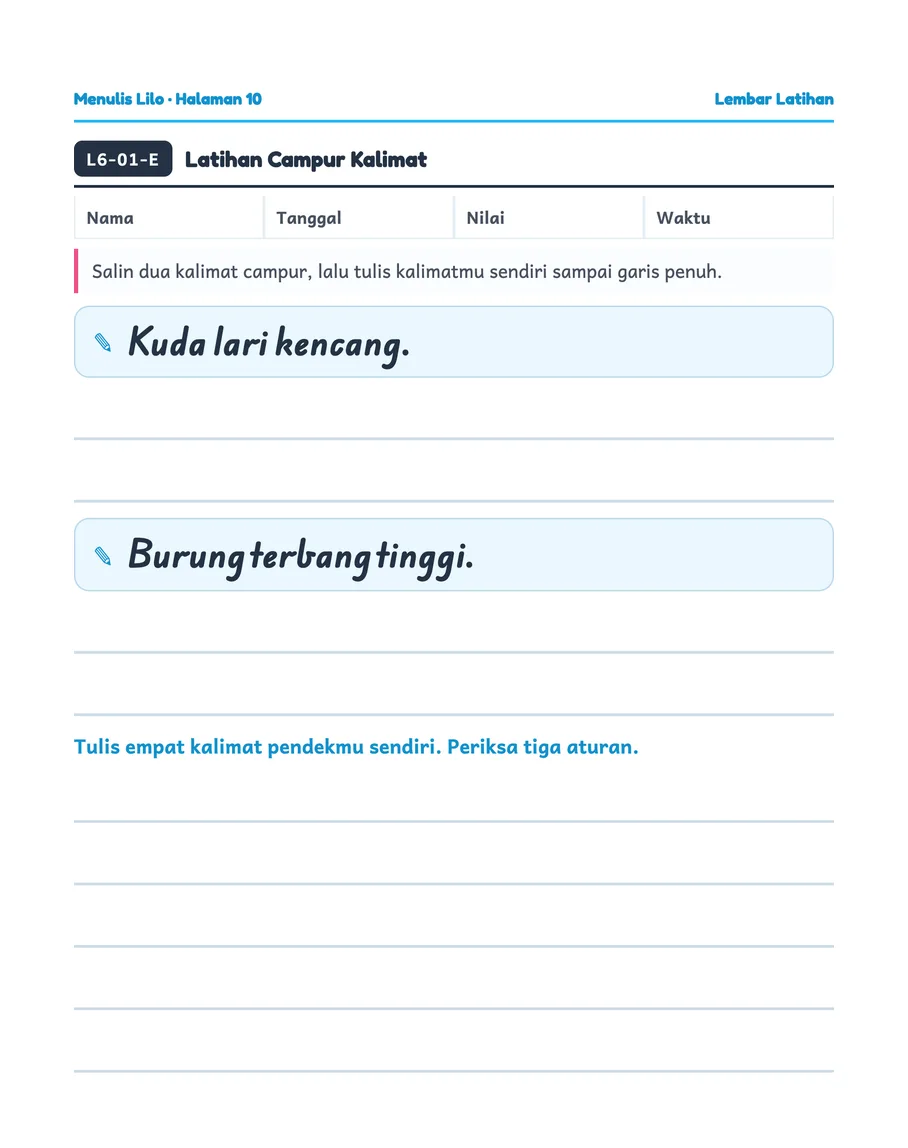
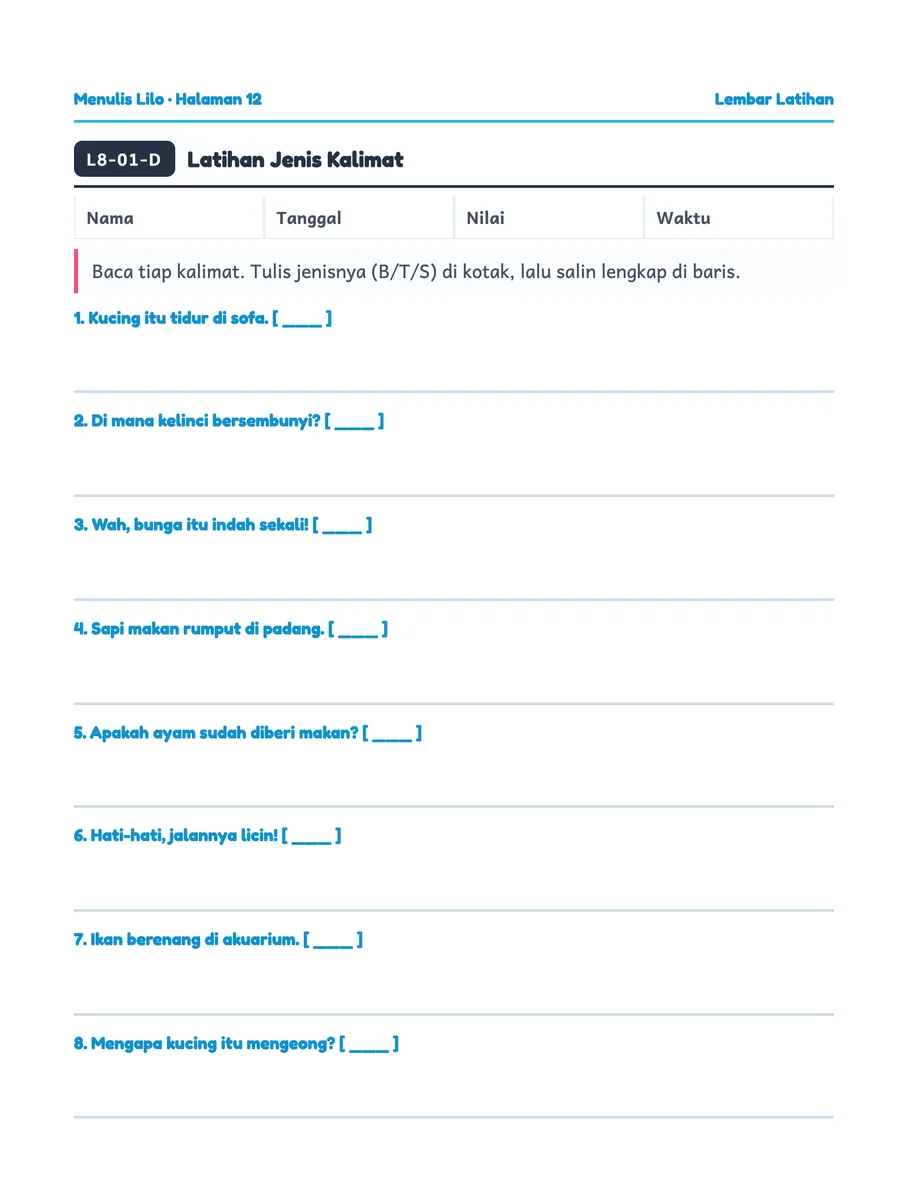
Sixteen materials ordered from hand readiness to sentences, including posters and a parent guide.
Sixty line and pattern exercises, ten first mark patterns, and twenty screen free fine motor games.
Letters A to Z at three levels of dot thickness, numbers 1 to 20 with directional arrows that prevent reversals, and reusable tracing cards.
Capital and lower case pairs, letters without dots on four ruled lines, themed word writing, and one hundred themed words.
Building simple sentences from words your child already owns, then copying fifty everyday sentences neatly.
A letter height poster, a hand movement map, a fifteen minute writing readiness check, and a guide to teaching handwriting calmly.
 Jago Pegang Pensil
  Pola Pra-Menulis
 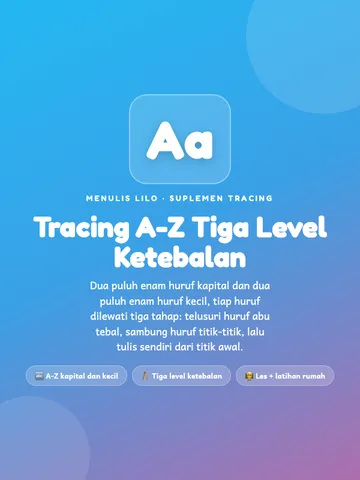 Tracing A-Z Lengkap
 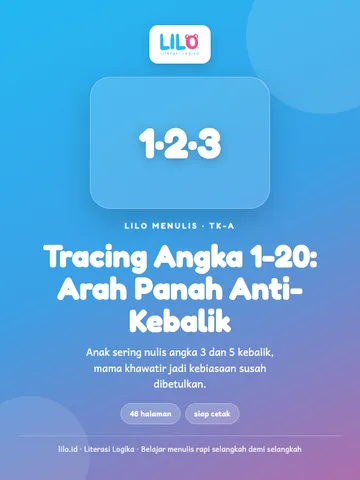 Tracing Angka 1-20
 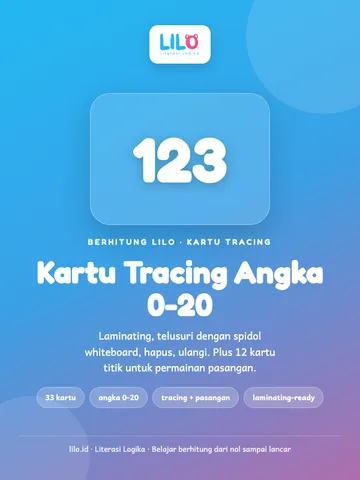 Kartu Tracing Angka Laminating-Ready
 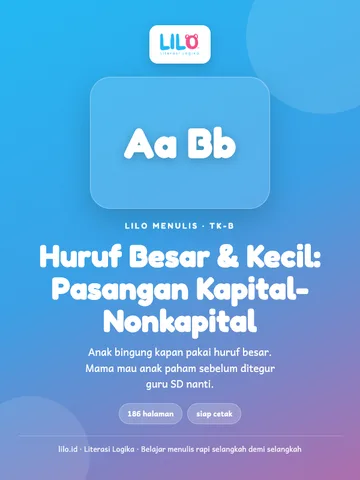 Huruf Besar dan Kecil
 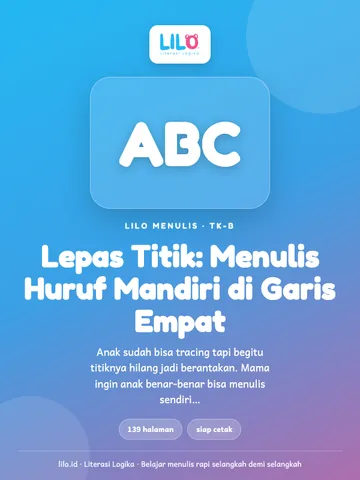 Lepas Titik: Menulis Huruf Mandiri di Garis Empat
 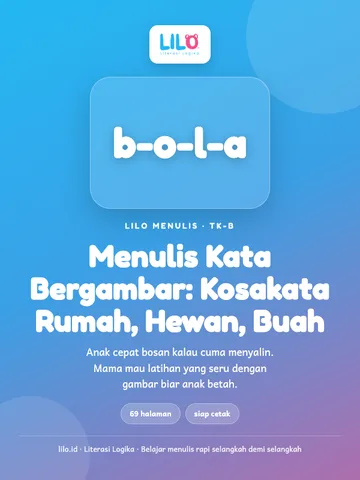 Menulis Kata Bergambar
  Kata Pertamaku
  Kalimat Pertamaku
  Menyalin Kalimat Rapi
  Tinggi Huruf yang Benar
 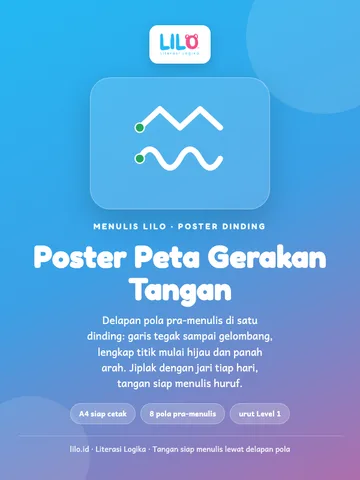 Peta Gerakan Tangan
  Panduan Ortu
  Resep Motorik Halus
  Coretan Pertama
 The number tracing cards are made to be laminated, so they can be written on with a marker and reused many times.
Writing takes real energy from a small hand. So that your child stays fresh and interested, the material is used in short, consistent portions.
The fifteen minute readiness check shows whether your child needs hand strengthening or can move straight into letter tracing.
One sheet daily beats five in a single sitting. Hands need rest to build a movement habit.
Start with thick dots, move to thin dots, then to empty ruled lines. Step down only once letters look steady.
The letter height poster and hand movement map act as visual reminders, sparing you from constant spoken correction.
Use the name sheet as a small celebration. Nothing makes a child prouder than writing their name neatly.
Three things make Lilo handwriting practice feel different in use.
A child with weak fingers writes using the whole arm. Pattern work and hand games reduce that fatigue.
Every letter and number carries the same arrow direction across all sheets, so a single movement habit forms and reversals fade.
Letter tracing sheets carry sounds and example words, so hand and ear learn together.
It is normal until about age six. What helps is a consistent direction of movement, and the tracing sheets here use the same arrow pattern across every letter and number.
Ordinary paper is fine. For the number tracing cards, slightly thicker paper or lamination makes them last through repeated use.
Yes. Pattern work and ruled line practice apply equally, and the parent guide includes notes on a more comfortable paper angle for left handed children.
Shorten sessions to ten minutes and alternate with the fine motor games inside the pack. The hand still trains without your child feeling ordered to write.
Yes. The name sheet is made to be filled in before printing, so your child practises writing their own name.
In part, since your child copies words and sentences that can be read. For a full reading path, the material sits in the Reading Before Primary School Bundle.
Neat handwriting grows from a ready hand, which is what this pack builds. The classes below add live correction from a tutor as your child writes, while the two packs beside them fill in reading and counting.
Sixteen materials ordered from pencil grip to neatly copied sentences.